



Source: Melissa Kaye
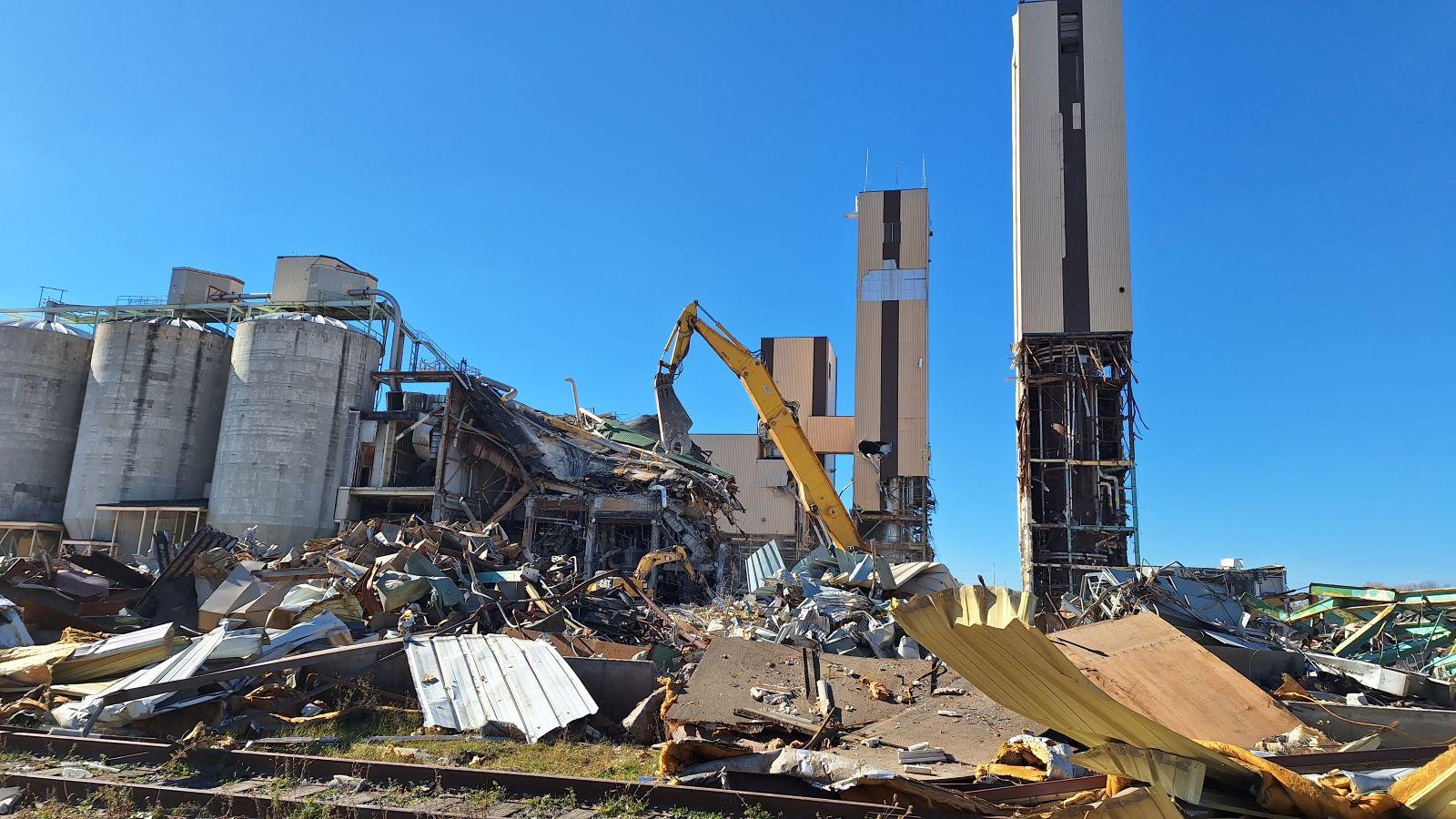
MRD Group is leveling the Wisconsin Rapids kraft mill site
It’s a bittersweet moment in Wisconsin Rapids. The kraft mill site is being leveled to make way for new development.

Oct 29, 2025, 1:25 PM CST


Share
WISCONSIN RAPIDS, Wis. (WFHR / WIRI) – When the Wisconsin Rapids paper mill closed in 2020, around 900 people were put out of work. The state lost a quarter of its total pulpwood processing capacity.
A report from the Wisconsin Council on Forestry last December reports that, while Wisconsin remains the top paper-producing state in the nation, paper mill jobs in the state have decreased by 46 percent in roughly the last fifteen years.
The VERSO mill property has been in flux since it closed. The Swedish company Billerud purchased the site in 2022. Billerud sold idle sections of the site and the land to Capital Recovery Group, LLC. The Converting Facility building is still owned by Billerud, and they employ around 150 people in the converting mill along the river. SONOCO owns the base mill and employs around 165 people manufacturing and converting paperboard.
The #16 mill machine has been sold, and they’re working to clear it out of the building. The number designation stands for first mill, sixth machine. This machine was the biggest at the time it was installed. Once the #16 building is cleaned out, they’ll be able to look for renters for the space. Mayor Zacher said once that happens the whole mill site will be back in action, except for the kraft mill. Once that mill was shut down, it could never be restarted, due to emissions and the age of the equipment.
MRD Group is demolishing and recovering the site
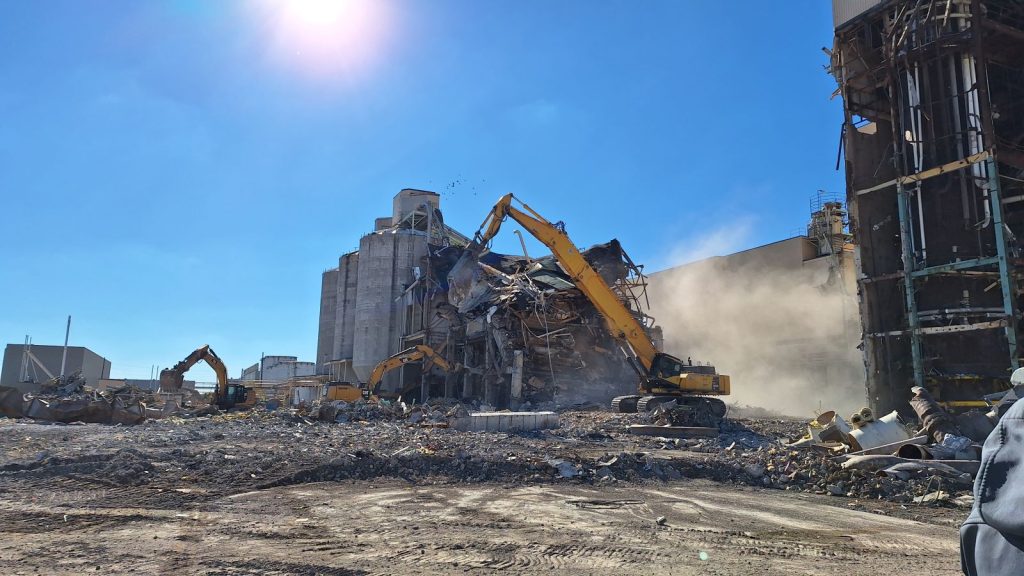
For just over a year, drivers on Highway 34 have been able to catch a glimpse of the demolition from the overpass. While much of the property isn’t visible from the road, you can hear the sounds of demolition — especially when MRD Group is bringing down the stacks. Owner Gerald Blomberg said once they were awarded the project in September 2024, they have worked steadily to finish ahead of schedule.
“ We’re just on our 13th month, and the whole project is 18 months. We’ll have most of the structures completely on the ground here by the end of November,” says Blomberg. “Then we’ll be spending three to four months on cleanup… when it’s all said and done, we should be about three months ahead of time.”
Blomberg says they should be able to drop the two remaining wood digesters very soon.
Environmental concerns
MRD Group is especially thorough in their approach to the project. They spent the first three months sweeping the property for any hazardous materials and removing them from the site. They still have an environmental team on site in case they find anything regulated that needs special disposal.
“We did a clean sweep with 30 people for over six weeks and then we did it again,” explains Blomberg. “We believe we pretty much have everything off site that’s regulated, so we’re happy about that.”
Recovery and removal
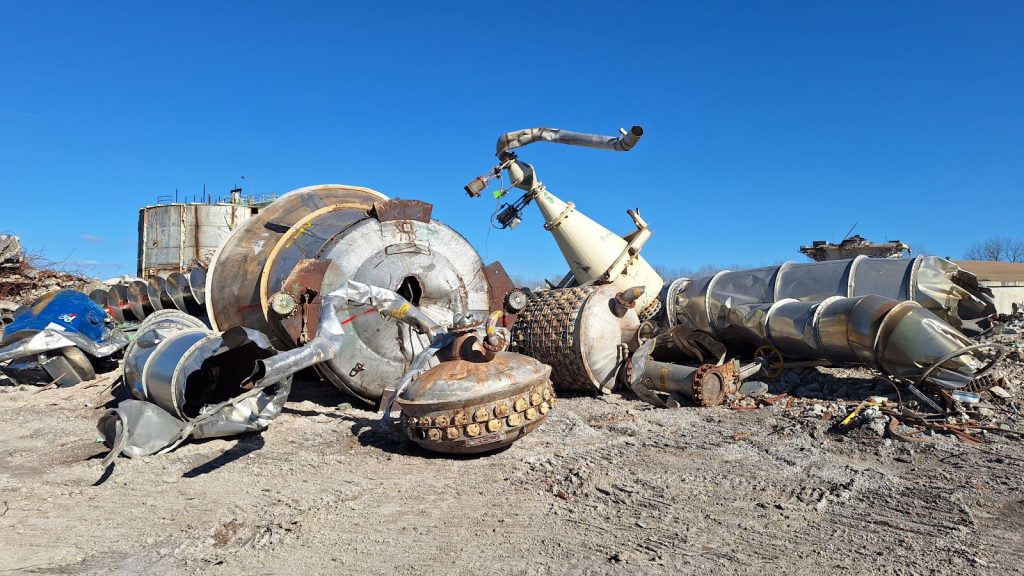
As the buildings are coming down, machine operators will work to sort materials into piles by type.
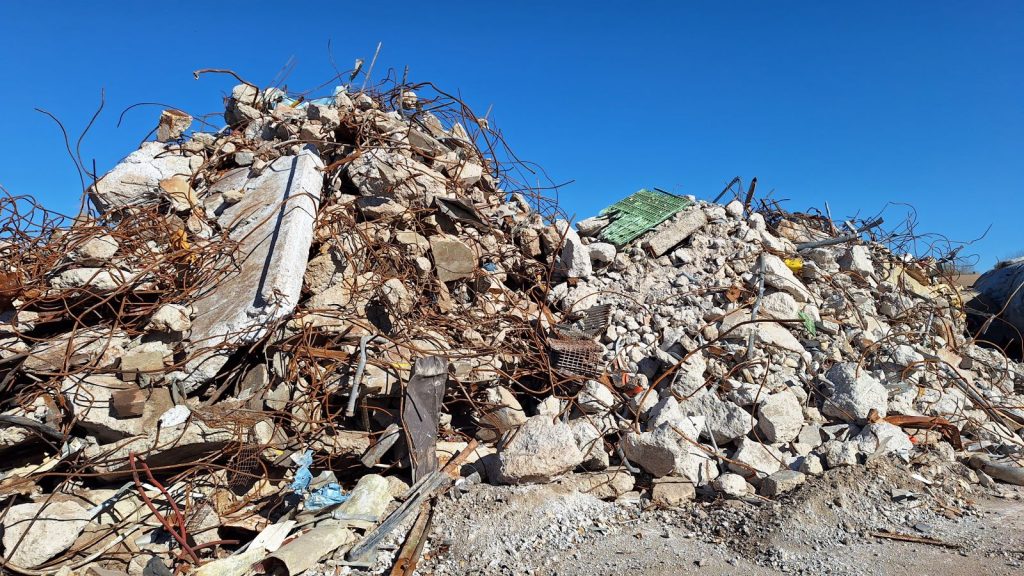
Recyclable materials are being removed by open top train cars called gondolas. Blomberg said everything is pre-weighed before loading. They’ve sent out roughly 400 cars so far, and they have about 150 to go before the site is cleared.
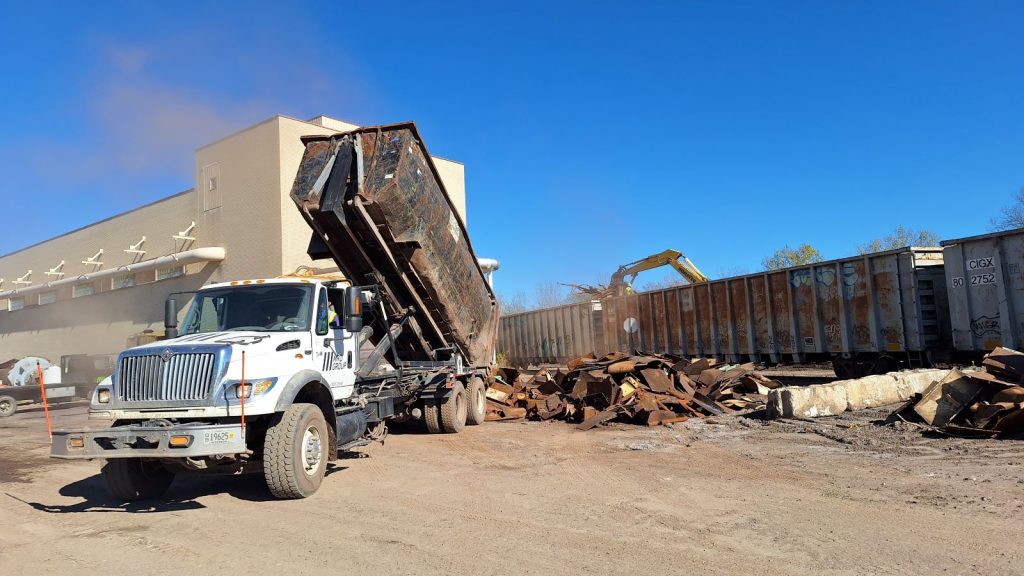
Much of the steel is being transported to the Waupaca foundry to be melted down and recast.
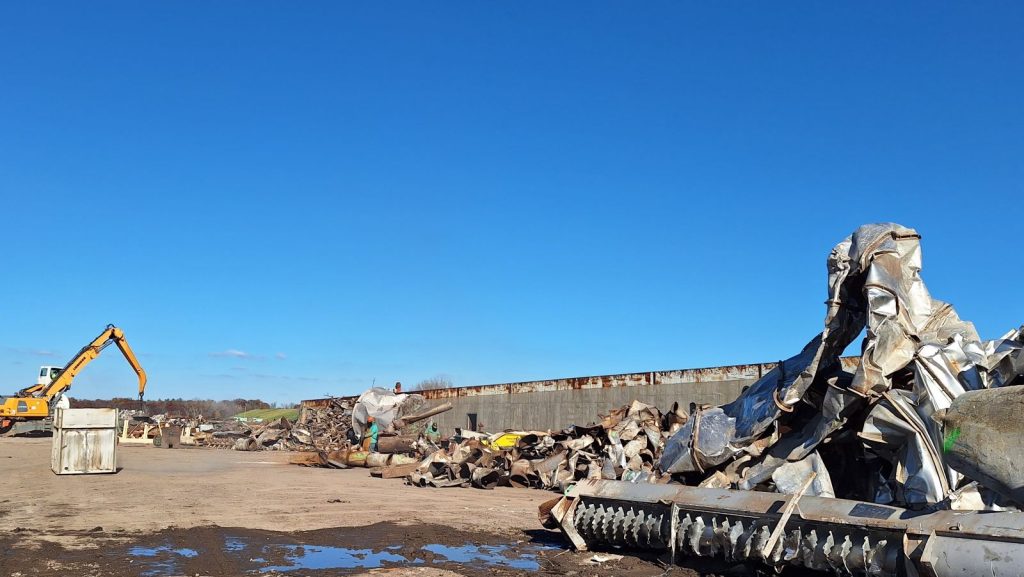
The stainless steel and copper are going to Chicago. The scrap MRD Group is able to recover and sell is their compensation for the job.
Honoring history while moving into the future
When he was elected as mayor a year and a half ago, Matt Zacher said he knew there would be changes coming to the mill site. It’s been an iconic part of Wisconsin Rapids history and had a huge impact on the economy when it closed.
“You have to respect the history of what’s happened here. 120 years to build it and now we’re taking it down in a year’s time,” says Zacher. “It’s a lot of sad emotions that go into it, there’s a lot of anger from people in the community but at the same time, nobody wants to sit here and watch this thing deteriorate without seeing something possible for the future.”
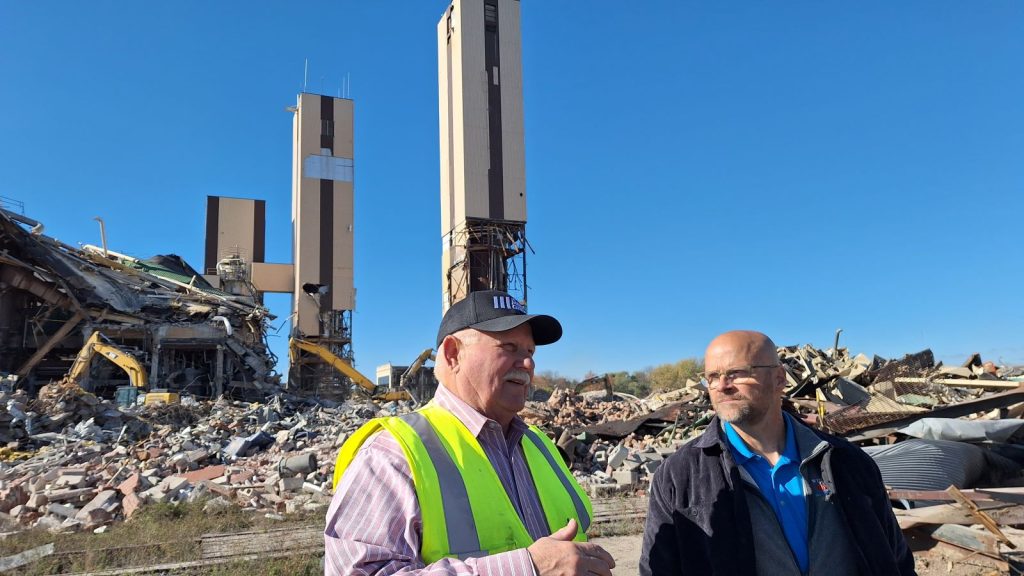
Zacher said once the site is ready for development, there will be 220 acres of prime real estate.
“We want manufacturing if at all possible. As a government, we don’t have say over what happens,” Zacher explains. “We just get to help as much as we can and stay out of the way as much as possible.”
While nothing is set in stone yet, there’s been interest in the location. Zacher said datacenters are a possibility because of the amount of power the Consolidated Water Power Company (CWPCo) has available.
“They’re not a lot of jobs, but ultimately we wanna keep CWPCo solvent to the power companies,” says Zacher. “So if that comes down to being able to sell power to some AI companies, then we will do that too.”

Melissa Kaye is the News Director for WFHR and WIRI in Wisconsin Rapids. Email her at [email protected].
Want More Local News?

Civic Media
Civic Media Inc.
The Civic Media App
Put us in your pocket.