




Apr 15, 2026, 9:00 AM CT


Share
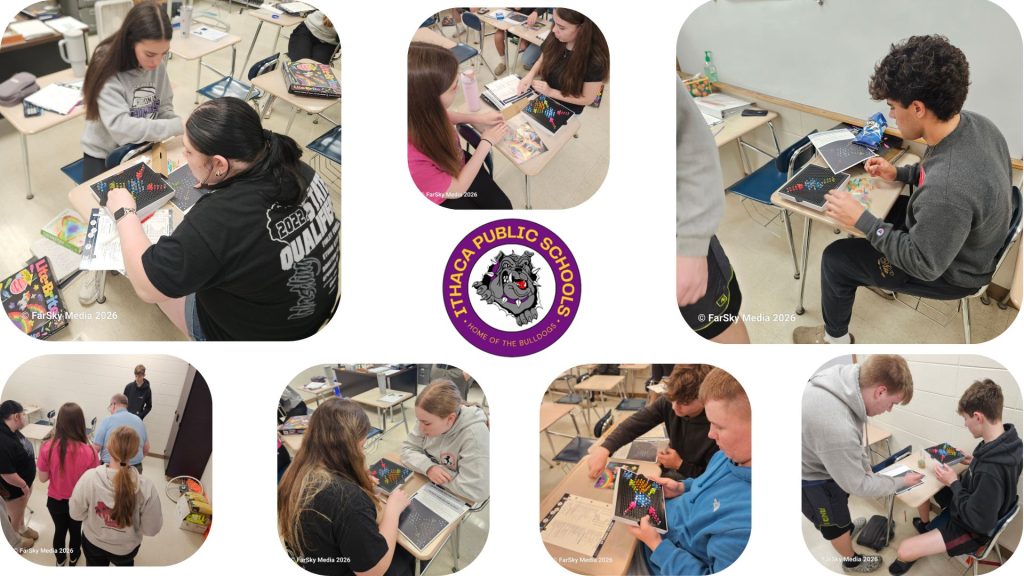
At Ithaca High School, Mr. Andresen’s class is learning about nuclear fission.
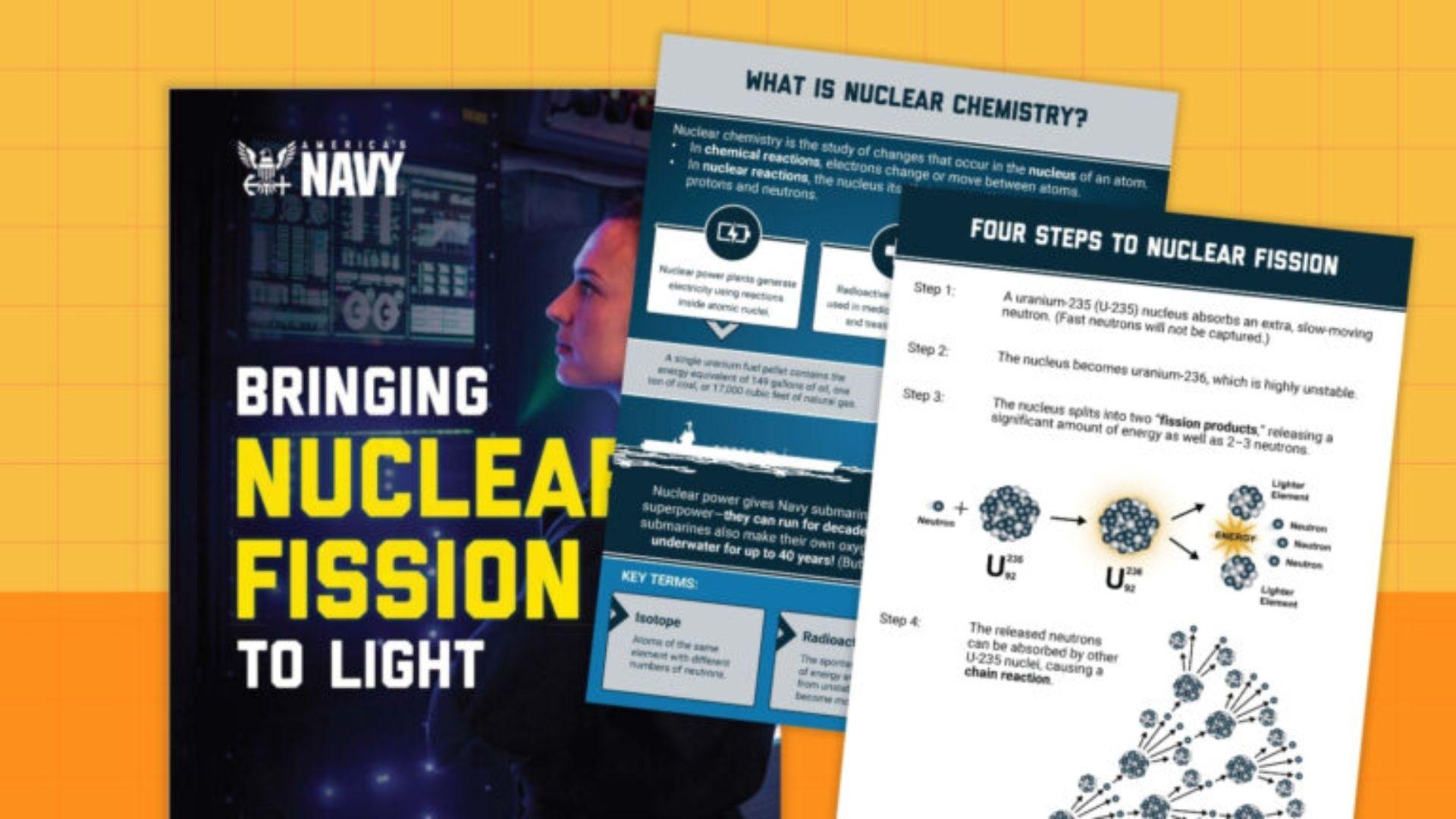
While Ithaca cannot have an ACTUAL reactor in the classrooms, they CAN use other components to represent atoms, nuclei, and outputs. That’s where the US Navy comes in. Through it’s program called BRINGING NUCLEAR FISSION TO LIGHT, the Navy (using ITK Inc. as the distributor) provided Mr. Andresen with Lite-Brites, materials, workbooks, and class handouts complete with trigonometric identities, physics formulas, common ions and more.
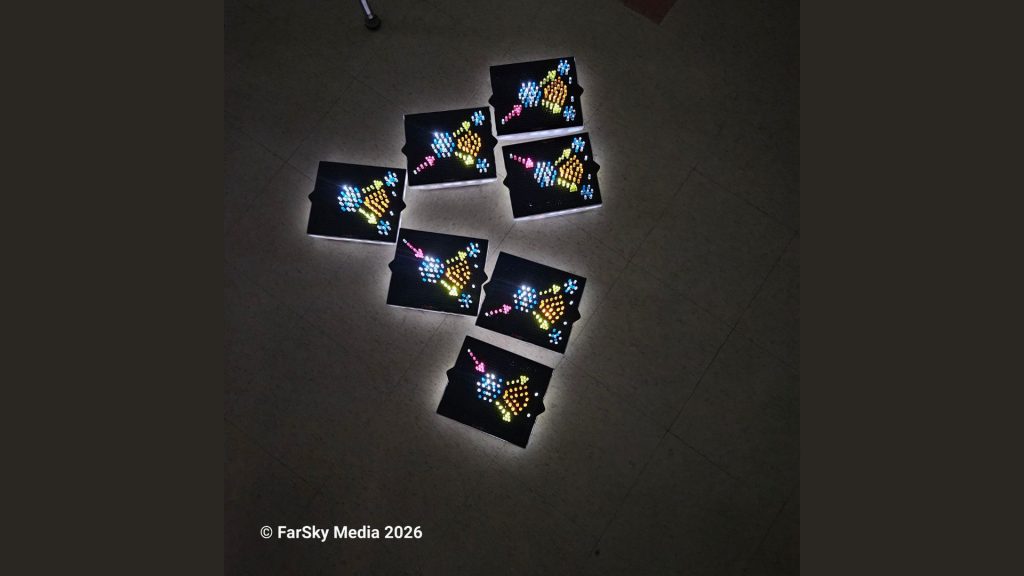
At the heart of this experiment is the LITE-BRITE. Students built a chain reaction that powers submarines and aircraft carriers. Using Lite-Brite boards, students’ model how splitting a single atom releases massive energy.
It was a fun, unforgettable, and interactive way to explore the science behind nuclear power! At the end of the lesson, the students powered up the Lite-Brite and assembled an entire chain-reaction.
This lesson is aligned to NGSS high school standards with ties to topics like nuclear chemistry and STEM. Your students will learn about:
- Applications of Nuclear Chemistry
- Isotopes & Nuclear Notation
- Types of Radioactive Decay
- Nuclear Fission & Chain Reactions
Nuclear fission is when a big atom breaks into two smaller atoms and releases a lot of energy.
Think of a large atom—like uranium—as a tiny, tightly packed bowling ball. If you hit it with a small particle called a neutron, the atom becomes unstable and splits apart. When it splits:
- It breaks into two smaller atoms
- It throws off extra neutrons
- It releases a huge amount of energy (mostly heat and radiation)
Why it can turn into a chain reaction
Those extra neutrons that fly out can hit other big atoms, causing them to split too. If this keeps happening over and over, you get a chain reaction.
- Controlled chain reaction → used in nuclear power plants to make electricity
- Uncontrolled chain reaction → what happens in a nuclear bomb
Why it releases so much energy
The pieces created after the split weigh slightly less than the original atom. That tiny missing mass turns into energy (Einstein’s E = mc²). Even a small amount of mass becomes a massive amount of energy.
Real-world examples
In a nuclear power plant:
- Uranium atoms split
- The heat boils water
- Steam spins a turbine
- The turbine generates electricity
The future of this activity at Ithaca
Mr. Andresen plans to utilize the Navy provided Lite-Brites in the years to come and hopes to include younger grade levels in this STEM activity.

Adam Hess has been involved in radio broadcasting since 1990, with many of those years spent on the air at WRCO FM in Richland Center. Currently, Adam hosts the Weekend Wake-up and Prime Mover Saturdays on WRCO FM, jumps in and helps out with news duties, handles Social Media duties for WRCO and WRCE, and is the Director of Technology at a Southwest Wisconsin School District. Reach him at [email protected].
Want More Local News?

Civic Media
Civic Media Inc.
The Civic Media App
Put us in your pocket.