





Source: Civic Media

Dec 12, 2025, 1:12 PM CST


Share
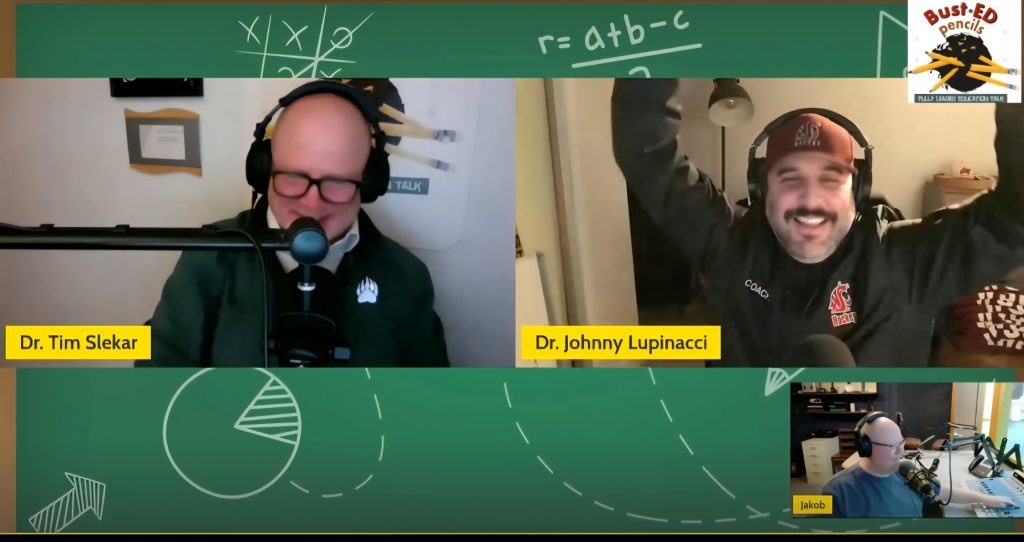
The time just before the holiday break is being dubbed as “finals season.” And it’s hitting full swing with students everywhere relying on flashcards, caffeine, and sheer optimism to carry them across the finish line. Dr. Tim Slekar and Dr. Johnny Lupinacci, co-hosts of Busted Pencils, pull producer Jakob Morgan into the frenzy for a special Producer’s Choice episode. Morgan leads the discussion with plenty of opinions on studying, exams, and what can really help your kids cope.
Listen to the entire episode here:
[podcast src="https://civicmedia.us/shows/busted-pencils/2025/12/12/to-cram-or-not-to-cram-pcs-29"]Lupinacci admits up front that as a student he was a big crammer. He kept shoeboxes full of 3×5 flashcards and pulled intense study marathons only days before a test.
“Do as I say, not as I did,” he jokes. “Cramming worked for me but it’s far from ideal. I now recommend confidence-building with practice tests, and preparation that begins earlier than the night before. And if you go in rested, hydrated, and having taken a practice exam, you’re already points ahead.”
Slekar’s experience was different. His was rooted not in cramming but in anxiety.
“The only way I could bring myself down,” he says, “was to sit and write out everything I thought I knew.”
He explains the now-legendary “blue book.” The flimsy, notebook-like booklet was used for written college exams long before online testing became the norm.
“Today, some professors are turning back to blue books as a way to prevent AI-assisted cheating,” Slekar shares.
But when it comes to test prep itself, Slekar is blunt. He simply doesn’t believe studying – as it’s traditionally defined – actually measures learning. He instead says students have to navigate the system as it exists. His tip?
“Drop your notes into an AI tool,” he suggests, “and have it turn everything into a short podcast you can listen to on your drive. That’s way better than hoping you remember weeks of lectures.”
Both of the educators seem to agree on one thing – authentic assessments matter. Whether it’s identifying bones on a model skeleton or writing a thoughtful history essay, the goal should be understanding, not memorizing. But until testing culture changes, they encourage students to control what they can, including getting sleep, staying organized, reducing stress, and practicing real-test conditions.
And if all else fails, Slekar says don’t rely on the old myth one teacher shared with him.
“Record your notes and play them back as you sleep,” he explains. “It doesn’t work. I woke up and still didn’t know a thing.”

Teri Barr is Civic Media’s Content Creator and a legend in Wisconsin broadcast journalism. Email her at [email protected].
Want More Local News?

Civic Media
Civic Media Inc.
The Civic Media App
Put us in your pocket.